When McDonald’s sells a burger in India, it doesn’t sell beef. It sells the McAloo Tikki, built for local tastes. Same brand, different product, different market. That one decision? That’s international marketing in a nutshell.
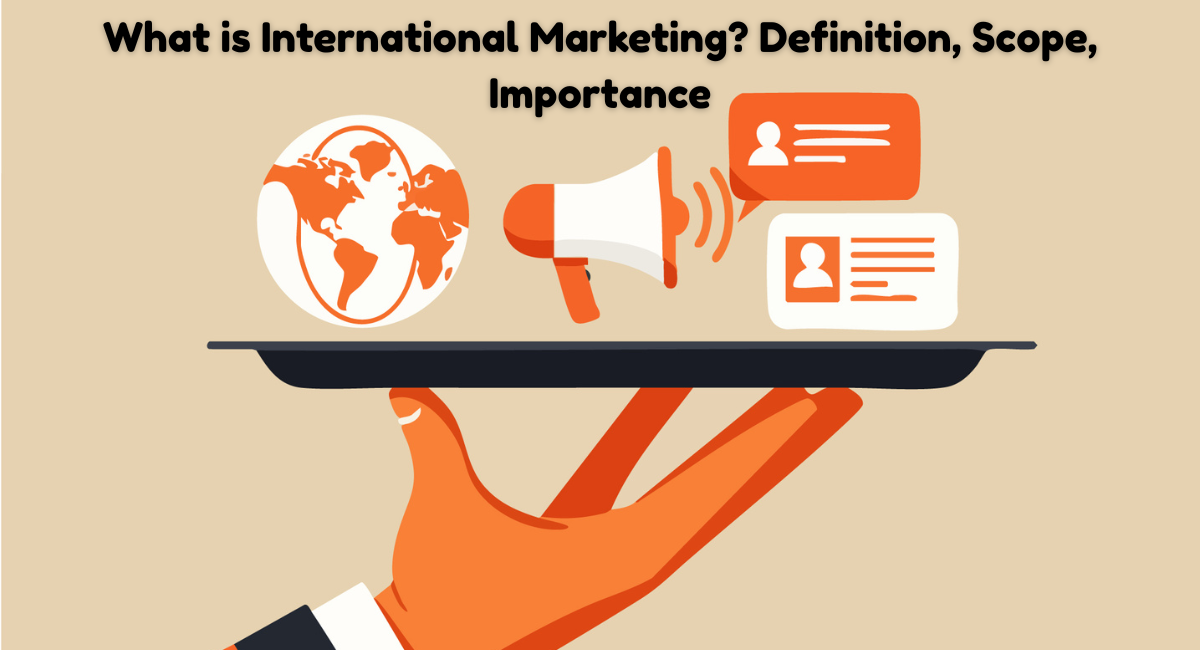
International marketing is promoting and selling your products across national borders — and adapting the strategy to fit each country’s culture, laws, and buyers. It’s not just “selling abroad.” It’s reworking how you market so a message that lands at home also lands somewhere completely different.
What Is International Marketing?
International marketing is what happens when you take your product beyond your home country and sell it to customers in other nations. And the core challenge is simple to say, hard to do: what works at home rarely works everywhere unchanged.
A name, a slogan, a price, even a colour can mean something completely different across a border. So international marketing is really the job of adapting every part of the mix — product, price, place, promotion — to each market, without losing what makes your brand your brand.
Scope of International Marketing
Entering a new country touches almost everything you do. In practice, the scope covers five areas:
- Market research — study the buyers, competitors, income levels, and culture before you spend a cent. Skip this, and you’ll learn the hard way.
- Product adaptation — tweak the product to fit local needs and laws. IKEA sells smaller furniture in Japan for smaller homes; McDonald’s rebuilds its menu country by country.
- Pricing — set prices around local buying power, competition, taxes, and currency swings. The same product rarely carries the same price across borders.
- Distribution — build the supply chain and routes to actually get the product into customers’ hands.
- Promotion — tailor the message to the local language and culture. One global campaign rarely fits all; the fundamentals still come back to the core concepts of marketing, applied market by market.
Why It Matters
Going international is one of the biggest growth levers you have — and the money backs it up. The cross-border e-commerce market alone is worth about $551 billion in 2025 and is projected to nearly quadruple to roughly $2 trillion by 2034, growing over 15% a year, according to Precedence Research. That’s a market you can’t afford to ignore. Here’s what selling across borders gives you:
- A bigger market — millions of customers your home country simply doesn’t have. Your domestic ceiling stops being the ceiling.
- Spread risk — sell in several countries, and a bad season in one won’t sink you. Your revenue isn’t chained to one economy.
- Economies of scale — more customers means bigger production runs, which drops your cost per unit and fattens margins.
- A stronger brand — win across cultures and you earn credibility a purely local player can’t touch.
- Sharper products — serving different customers forces you to understand them deeply, and that usually improves what you sell everywhere.
Look at Netflix. Instead of pushing one country’s shows onto the world, it pours money into local-language content made for each region — Korean, Indian, Spanish, and more. The payoff? Some of those local productions become global hits watched in dozens of countries. That’s international marketing done right: go deep on local, and the world often follows.
Key Characteristics of International Marketing
A few things set it apart from selling at home:
- A global outlook — you plan for the world as your market, not just your borders.
- More complexity — you’re juggling currencies, languages, legal systems, and consumer habits all at once.
- More risk — currency swings, political shifts, and sudden regulation hit foreign operations hard. Plan for it.
- Partnerships — smart companies often enter through local partners who bring the ground knowledge they don’t have.
The Nature of International Marketing
Four traits shape how it plays out day to day:
- It’s dynamic. Markets, tech, and tastes shift fast, so last year’s playbook can flop this year.
- It’s diverse. Every market has its own culture, economy, and rules, and your strategy has to bend to each.
- It’s cross-cultural. It’s not about translating words — it’s about resonating with values. A campaign that charms one country can offend another.
- It’s competitive. You’re up against global giants and local players who already know the market cold.
Reaching those different audiences also means rethinking how you group them — the same logic behind the levels of market segmentation, scaled up across countries.
How Businesses Enter International Markets
Nobody goes global the same way. The main routes, from lowest to highest commitment:
- Exporting — make it at home, sell it abroad. The simplest, lowest-risk way in, and where most companies start.
- Licensing and franchising — let a local company use your brand or process for a fee. Much of McDonald’s global footprint was built this way.
- Joint ventures — team up with a local business to share the cost, risk, and know-how.
- Direct investment — build your own offices or factories in the country. Most expensive, most control.
Frequently Asked Questions
What is international marketing in simple words?
Selling and promoting your products in other countries, while adapting your approach to fit each market’s culture, language, laws, and buying habits.
What’s an example of international marketing?
McDonald’s is the classic. It keeps the global brand but changes the menu per country — no beef in India, teriyaki burgers in Japan, vegetarian options where locals want them. Netflix does the same by funding local-language shows for each region.
What’s the difference between international and global marketing?
International marketing adapts the strategy for each country. Global marketing leans toward one standardized approach worldwide. Most companies sit in between — a recognizable global brand with locally adapted marketing.
Why is international marketing important?
It unlocks far bigger customer bases, spreads risk across economies, cuts costs through scale, and strengthens the brand. For a lot of businesses, it’s the difference between hitting a wall at home and continuing to grow.
Should Your Business Sell Internationally?
Here’s the thing — international marketing isn’t just for corporations anymore. With online platforms and cross-border shipping, even a small business can sell across borders. But the ones that win treat each new market as its own project, not a copy-paste of home.
So if you’re weighing it, start small. Pick one market that genuinely fits your product, research it properly, and adapt before you scale. The businesses that struggle abroad assumed the world works like their home country. The ones that win took the time to learn how it doesn’t. Before you expand, it also helps to be clear on what selling really involves at its core.